Affiliate Disclosure: Watt Wise Living is reader-supported. When you buy through links on our site, we may earn an affiliate commission at no extra cost to you.
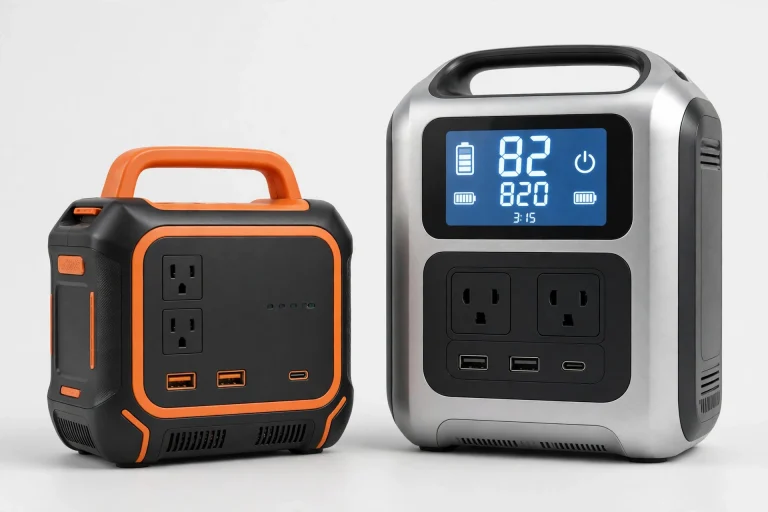
Two power stations, the same 1,024Wh capacity, and two very different ideas about what matters most. The Anker SOLIX C1000 Gen 2 bets on higher output, lower weight, and the fastest wall charging in the class. The EcoFlow DELTA 3 Plus bets on expandability, a bigger solar input, and a deep accessory ecosystem. If you are choosing one 1kWh unit for a home office, an apartment, or a small home, this is the comparison that decides it.
Key Specifications
- Anker SOLIX C1000 Gen 2 capacity: 1,024Wh LiFePO4, rated for 4,000 cycles
- Anker output: 2,000W continuous, 3,000W peak, 10 ports
- Anker charging: 0 to 100 percent in about 49 minutes in UltraFast mode, 600W maximum solar input
- Anker weight: 24.9 lbs, UPS switchover in about 10ms
- EcoFlow DELTA 3 Plus capacity: 1,024Wh LiFePO4, rated for 4,000 cycles to 80 percent, expandable up to 5kWh with extra batteries
- EcoFlow output: 1,800W continuous, 3,600W surge, X-Boost up to 2,400W for heating appliances
- EcoFlow charging: 0 to 100 percent in about 56 minutes by AC, up to 1,000W solar input across two 500W inputs
- EcoFlow weight: 27.6 lbs, UPS switchover under 10ms, 140W USB-C ports
- Prices checked 2026-10-21: Anker seen around US$449 on sale against a US$799 list price in current listings; EcoFlow at US$699 at REI
What Stands Out
The Anker wins the spec sheet fight that most buyers feel every day. Its 2,000W continuous output runs combinations the EcoFlow cannot, like a microwave alongside a fridge, without leaning on a boost mode. It is also nearly 3 lbs lighter, which matters more than it sounds when you carry a unit between rooms or out to a car. The 49 minute full charge is the fastest here, so a storm warning leaves time to top up and still get everything else done.
The EcoFlow answers with flexibility. No other 1kWh station here can grow to 5kWh later, so an apartment backup today can become a small home system next year without replacing the main unit. Its 1,000W solar ceiling is also in another league: paired with enough panels, it can refill in roughly 70 minutes of strong sun, while the Anker caps at 600W. Add EcoFlow alternator chargers and smart generators, and the DELTA 3 Plus is the better off-grid and RV base.
Things to Know
On price, the Anker is hard to ignore at its frequent sale levels, but EcoFlow pricing moves too, so check both on the day you buy. Neither unit runs a whole home, and both will drain fast under a space heater or a large kettle habit. The Anker is not expandable, so its 1,024Wh is all you will ever have. The EcoFlow expansion batteries add real cost, and its extra weight is noticeable on stairs.
Who Is It Best For?
Choose the Anker SOLIX C1000 Gen 2 if you want one self-contained unit with the most output, the lightest carry, and the quickest recharge for the money. Choose the EcoFlow DELTA 3 Plus if you plan to add batteries later, lean on solar, or want the wider charging ecosystem for a vehicle or cabin.
Verdict
For most home office and apartment buyers, the Anker SOLIX C1000 Gen 2 is the sharper buy: more continuous power, faster charging, and a lower street price. The DELTA 3 Plus earns its premium only if expandability or serious solar input is on your roadmap, and for those buyers it is the right call.
Not sure how much capacity you need? Start with our sizing guide.