Affiliate Disclosure: Watt Wise Living is reader-supported. When you buy through links on our site, we may earn an affiliate commission at no extra cost to you.
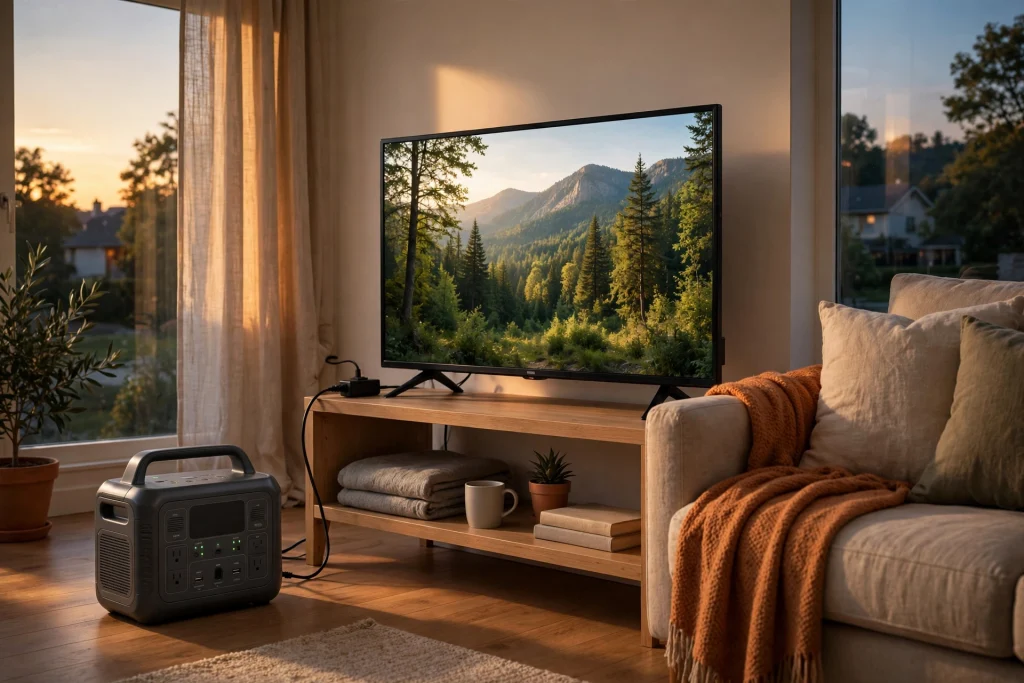
Yes, almost any modern power station can run a TV. The real question is for how long, and what else you want running at the same time. A TV on its own is a light load. Add a router, a streaming box, a soundbar, or a game console, and the runtime math changes quickly. This guide uses published TV wattage ranges and the standard runtime formula, with no hands-on testing claims.
Key Specifications
- Typical TV draw: 55-inch LED TV about 60 to 90W; 55-inch OLED about 105 to 110W (Jackery support guidance, checked 2026-10-25)
- Planning figure: Use 100W for a typical 55-inch TV if you do not know your exact model
- Runtime formula: Usable Wh = battery Wh x 0.85; Runtime hours = usable Wh divided by total watts
- Common add-ons: Router and streaming together add roughly 15 to 30W; a game console session can push the total entertainment load to 180 to 250W in published runtime tables checked 2026-10-25
- Inverter needed: A TV alone needs only a few hundred watts of continuous output; capacity in Wh decides runtime, not inverter size
What the Math Looks Like
For a TV alone at 100W: a 286Wh station gives about 2.4 hours (286 x 0.85 / 100). A 1,024Wh station gives about 8.7 hours. A 2,048Wh station gives about 17.4 hours. That is enough for a full evening of news, a movie, and the game on a 1kWh unit, with room to spare.
For a full entertainment setup at about 180W (TV plus internet and streaming or audio): a 1,024Wh station gives about 4.8 hours, and a 2,048Wh station gives about 9.7 hours. If a console pushes the total toward 250W, plan on about 3.5 hours from 1kWh and about 7 hours from 2kWh.
Things to Know
Brightness is the easiest runtime lever. Eco or cinema picture modes can cut TV draw noticeably compared with maximum brightness sports modes. Standby draw is small but real, so turn the TV fully off between sessions during an outage. Finally, keep some reserve for essentials: if the same station also needs to run a fridge or a CPAP overnight, do not spend the whole battery on entertainment first.
Who Is It Best For?
If TV is a nice-to-have during short outages, a compact 300Wh to 600Wh station is enough for a movie night. If you want TV, internet, and lights through a full evening, step up to 1kWh. For multi-day outages where entertainment helps the household cope, 2kWh or an expandable station is the comfortable choice.
Verdict
A power station can run a TV easily; sizing is about hours, not watts. Use 100W as your planning number, add your router and console honestly, and apply the 85% formula before you buy. Most households land happily at 1kWh for TV backup.
Check the current price of the EcoFlow DELTA 3 Plus (1,024Wh) on Amazon
Check the current price of the EcoFlow RIVER 3 Plus (286Wh) on Amazon