Five minutes of math now saves you from the wrong purchase. Too small and the fridge dies at 3 a.m. Too big and you paid for capacity you never use.
Key Takeaways
- Energy need = watts x hours, plus a 20% safety margin for inverter losses.
- Most homes land on a 1000Wh-class station with at least 1500W of output.
- Capacity is how long things run. Output is whether they run at all.
- Electric heat drains even big stations in under an hour. Size for essentials, not luxuries.
The most common regret in portable power is buying the wrong size: too small and the fridge dies at 3 a.m., too big and you paid for capacity you never use. Sizing a power station is simple math, and this guide walks you through it in five minutes so you buy once and buy right.
Step 1: List what must stay on
Write down the devices you actually want powered during an outage, plus their wattage (printed on the label or charger):
- Phone charger: 10 to 20W
- Laptop: 45 to 90W
- Wi-Fi router: 5 to 15W
- LED lamp: 5 to 15W
- CPAP machine (no heated humidifier): 30 to 60W
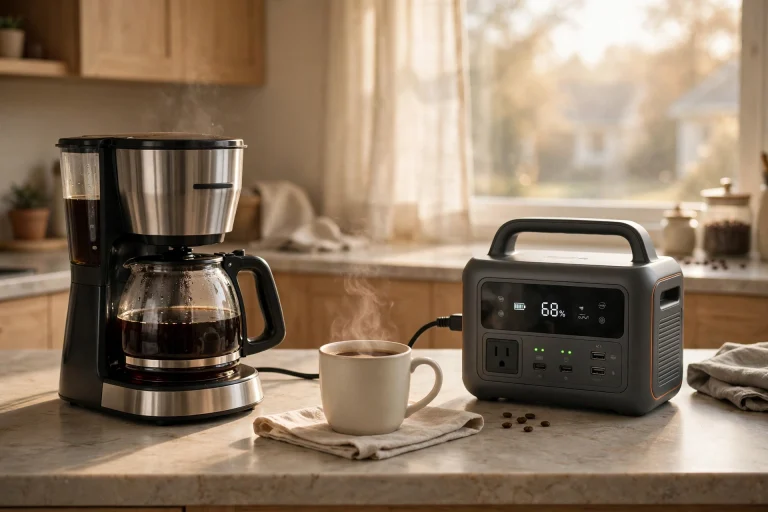
- Full-size refrigerator (running): 100 to 200W
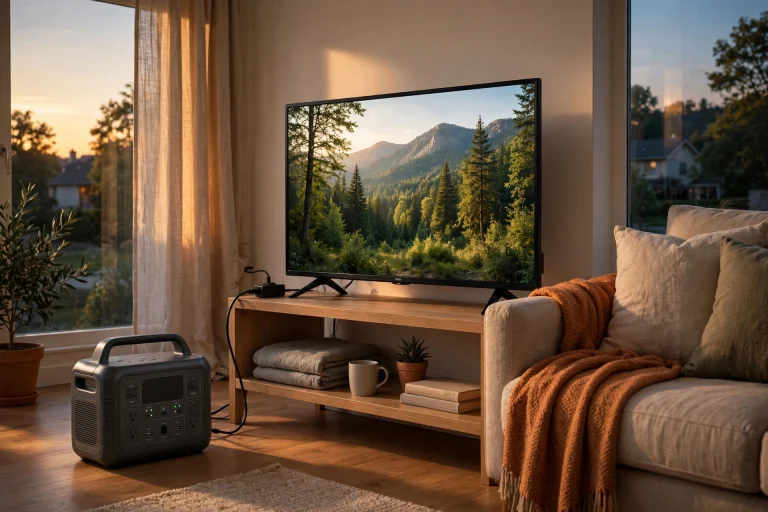
- TV: 60 to 150W
Step 2: How many watt-hours do you actually need?
Energy need = watts x hours. A 100W load running 8 hours needs 800Wh. Then add a 20% safety margin for inverter losses, because no power station converts with perfect efficiency. So 800Wh becomes about 960Wh, which means a 1000Wh-class unit is your target.
Work through your own list. A home office example: laptop (65W) plus monitor (30W) plus router (10W) plus lamp (10W) = 115W. Over an 8-hour workday that is 920Wh, plus the 20% margin is about 1100Wh, so a 1000 to 1100Wh station covers a full workday.
Step 3: Check the output, not just the capacity
Capacity tells you how long things run. Output (watts) tells you whether they run at all. Add up the watts of everything that might run at the same time, then make sure the station’s continuous AC output beats that number. A fridge plus a microwave plus a laptop can spike past 1500W, which is why many buyers choose a 1500 to 2000W unit even when a 1kWh battery would do the job on capacity alone. Surge ratings are for motor startups, not continuous use.
Quick picks by size
- Around 300Wh: phones, laptops, lights, short outages. Great first unit for apartments. Example: the BLUETTI Elite 30 V2 (288Wh) with true UPS protection for a desk setup.
- 500 to 800Wh: CPAP overnight (a 40W CPAP x 8 hours = 320Wh), home office half-days, weekend camping.
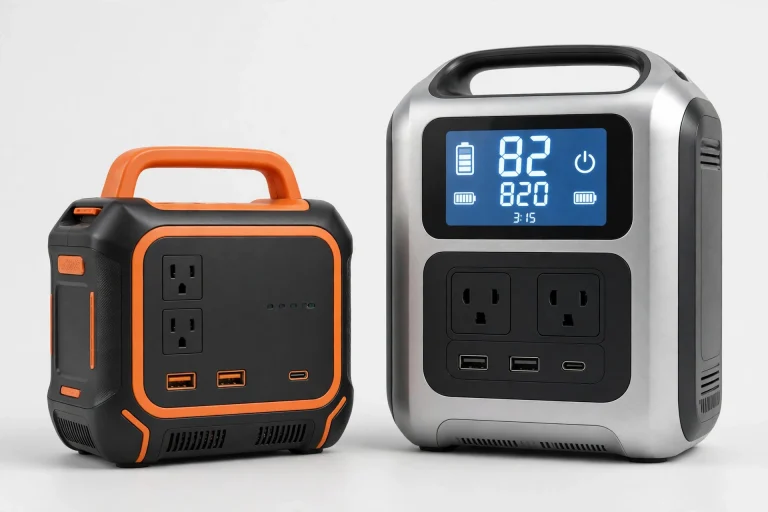
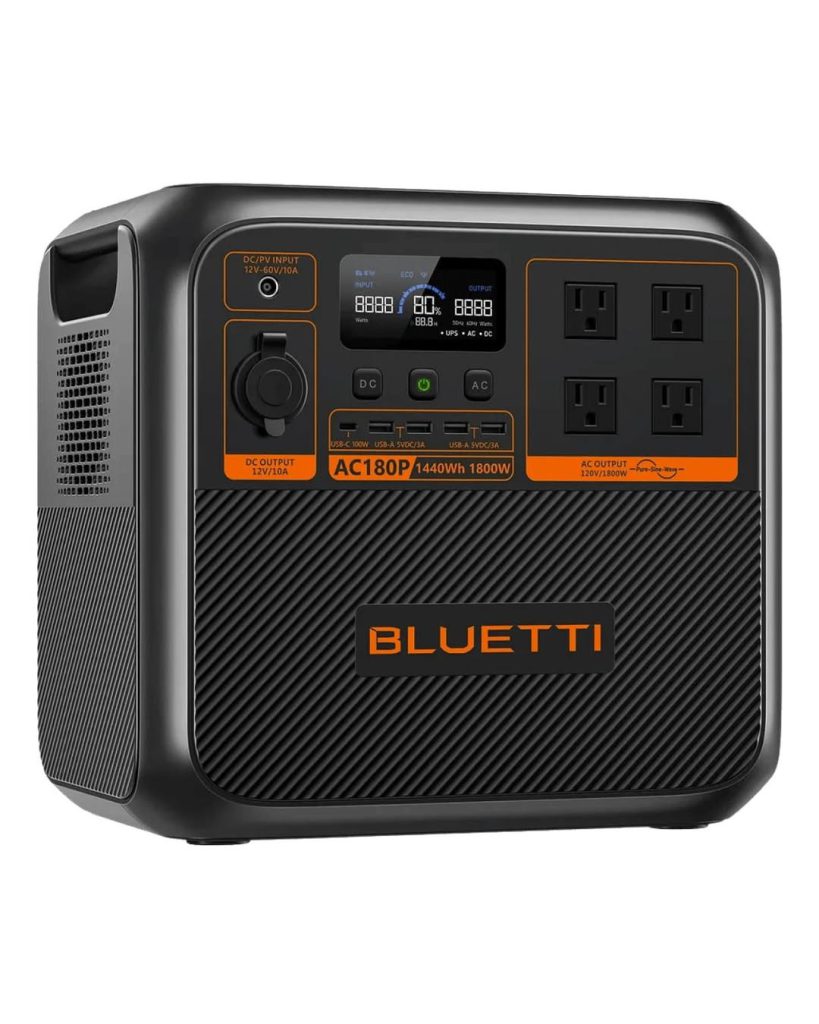
- 1000 to 1100Wh: the sweet spot. Full home-office workday, fridge for several hours, or a multi-day phone and laptop kit. Examples: the Jackery Explorer 1000 V2 and the EcoFlow DELTA 2.
- 2000Wh and up: real multi-day outage coverage, multiple fridges, power tools. Consider expandable units if you want to start smaller and grow, like the Jackery Explorer 2000 v2 or the EcoFlow DELTA 2 Max.
Two gotchas that ruin sizing
First, electric heat and resistive cooking (space heaters, kettles, toaster ovens) drain even big stations in under an hour. Size for essentials, not luxuries. Second, lithium batteries charge slowly or not at all below freezing, so keep the unit indoors in a Canadian winter and let it warm up before recharging.
Frequently Asked Questions
What size power station do I need for a fridge?
A full-size refrigerator draws 100 to 200W running. Over 8 hours that is 800 to 1600Wh, plus the 20% inverter-loss margin, so a 1000 to 1100Wh station covers a fridge for several hours. For multi-day fridge backup, step up to the 2000Wh class or an expandable unit.
How do I calculate what size power station I need?
Add up the watts of everything you want to run, multiply by the hours of runtime, then add 20% for inverter losses. Example: a 115W home office over an 8-hour workday needs 920Wh, plus margin is about 1100Wh, so a 1000 to 1100Wh station covers a full workday.
Is a 1000Wh power station enough for home backup?
For most homes, yes. A 1000Wh-class station with at least 1500W of output covers a full home-office workday or a fridge for several hours. It will not run electric heat or a whole home through a multi-day outage; that takes the 2 to 3kWh class.
Can I charge a power station in winter?
Lithium batteries charge slowly or not at all below freezing. Keep the unit indoors in a Canadian winter and let it warm up before recharging. This matters most for units stored in garages or used for winter camping trips.
The Bottom Line
Do the five-minute math before you shop. Most homes land on a 1000Wh-class station with at least 1500W of output; apartment dwellers and CPAP users often need less. Buy to your math, not to the biggest number on the shelf. Or skip the arithmetic and try our interactive sizing calculator
Affiliate Disclosure: Watt Wise Living is reader-supported. When you buy through links on our site, we may earn an affiliate commission at no extra cost to you.