Affiliate Disclosure: Watt Wise Living is reader-supported. When you buy through links on our site, we may earn an affiliate commission at no extra cost to you.
A gas generator is not an option in most apartments. It cannot run indoors, it cannot run on a balcony in many buildings, and most leases ban fuel storage outright. A portable power station solves the same problem a different way: no exhaust, no engine noise, no installation, and nothing your landlord needs to approve. Here is how to build a renter-friendly setup that actually works.
Start With the Loads, Not the Battery
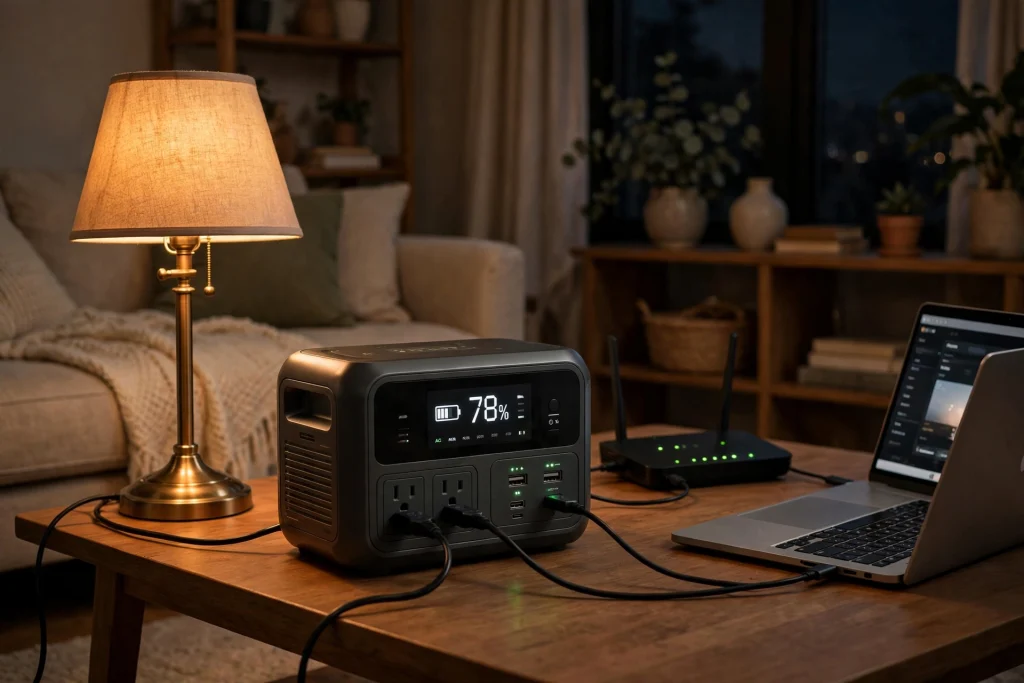
Apartment backup is not whole-home backup. The realistic outage list is short: a Wi-Fi router, phone chargers, a laptop, an LED lamp, and maybe a small fan. Add a refrigerator only if you step up in size. A router often draws around 10W and a laptop around 50W while working, so a modest station can keep communications and light going for many hours. Our sizing guide shows how to turn your own device list into watt-hours before you spend anything.
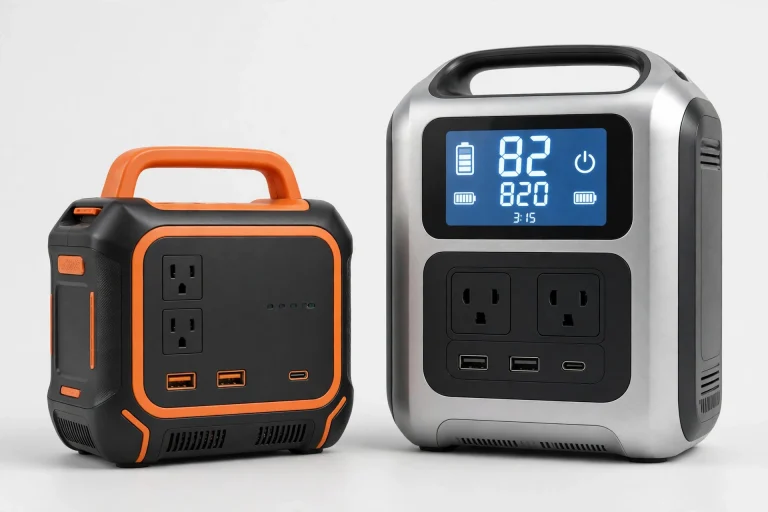
Key Specifications for Two Apartment-Friendly Options
- EcoFlow RIVER 3 Plus, compact pick: 286Wh, 600W AC output (1,200W X-Boost), LiFePO4 rated 3,000 cycles to 80%, 10.4 lbs, under 30dB, UPS switchover under 10ms, 0 to 100% in 1 hour on AC, 220W max solar input, expandable to 572Wh or 858Wh with extra batteries. Seen at CA$399 at a Canadian retailer, checked October 18, 2026.
- EcoFlow DELTA 3 Plus, step-up pick: 1,024Wh, 1,800W AC output, LiFePO4 rated 4,000 cycles to 80%, 27.6 lbs, 0 to 100% in 56 minutes on AC, expandable up to 5kWh. Seen at US$699 at REI, checked October 18, 2026.
Prices move daily, so confirm before you buy.
What Stands Out About This Setup
Silence and simplicity are the whole point. Both options above run at or under about 30dB at light loads, closer to a quiet room than to any generator, and both can sit in a closet or a corner of a home office, plugged in and ready. The RIVER 3 Plus is light enough to carry up stairs without thinking twice, and its sub-10ms UPS mode means a router and desktop do not drop when the grid flickers. If a fridge is non-negotiable, the DELTA 3 Plus is the smallest step that handles a compressor comfortably, which is why we reviewed it in full separately today.
Things to Know
Skip the space heater, the kettle, and the microwave on a small station. Resistive heating loads drain even a 1kWh battery in under an hour and will overwhelm a 600W compact model. Solar helps in an apartment only if you have a sunny balcony or window and your building allows panels there, so treat it as a bonus, not the plan. Charge your station indoors at room temperature, especially in winter, as our winter guide explains. Finally, check your lease for battery rules, though a consumer power station is normally treated like any other appliance.
Who Is It Best For?
Renters, condo owners, and anyone in a building where a generator is banned, impractical, or simply antisocial. Start with the compact class if your list is router, laptop, lights, and phones. Step up to 1kWh if a refrigerator, a CPAP, or a full workday of home office backup is on the list. Our CPAP sizing guide covers the medical-device math on its own.
Verdict
You do not need a generator, a garage, or a landlord negotiation to ride out an apartment outage. A closet-sized power station, charged before the storm and matched honestly to a short list of loads, keeps you connected, lit, and working while the building waits for the grid.